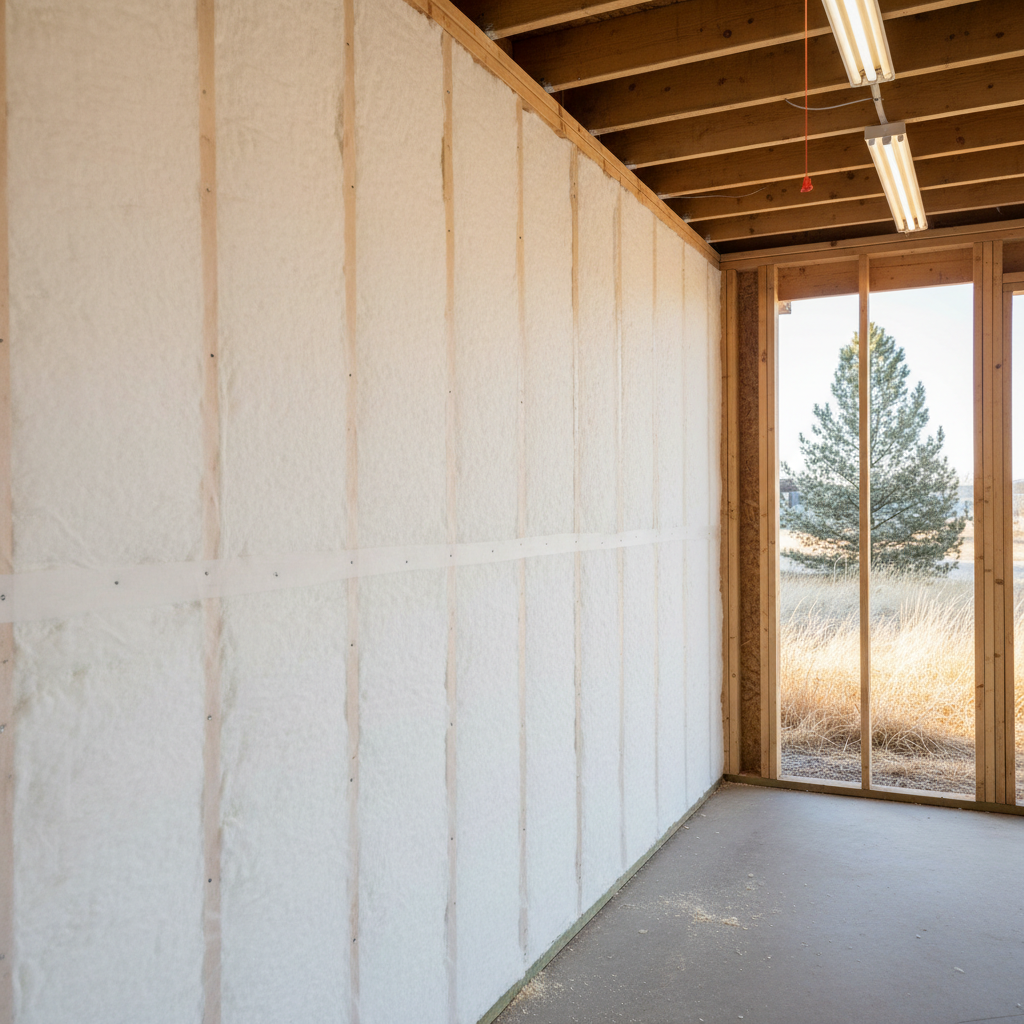
Is Insulating My Garage Actually Worth It?
Let's be real, nobody insulates their garage just because it sounds nice. You want to know if it's actually going to make a difference for your home and, let's be honest, for your wallet. The quick answer? Absolutely, especially if your garage is attached to your house.
Here in Eagle, we get some pretty hot summers and seriously chilly winters. So, an uninsulated garage can really suck up energy. Think of it like a giant, unconditioned box stuck right onto your climate-controlled home. Heat just pours in during the summer, forcing your AC to work overtime, and then it escapes in the winter, which drives up those heating bills. Insulating creates a kind of buffer zone, you know? It helps keep temperatures stable in your living spaces, and that can really help lower your utility bills.
Beyond saving energy, it also makes your garage a much more usable space. Maybe you use it as a workshop, or a home gym, or just a spot to keep things that don't like extreme temperatures. Insulation keeps it comfortable all year round. It can also cut down on noise coming from the garage into your house, which is a real bonus if you happen to have a bedroom right above it. (And that happens more than you'd think!)
What R-Value Do I Need for My Garage in Eagle, ID?
R-value is basically a way to measure how well insulation resists heat flow. Higher numbers mean better insulation, simple as that. For garage walls, especially if they're shared with your living space, you're generally looking at an R-13 to R-15. If there's a room right above your garage, the ceiling insulation needs to be a lot more substantial. We're talking R-38 or even R-49 for attics and ceilings in our climate zone here.
Idaho follows the International Energy Conservation Code (IECC), and Eagle typically falls into Climate Zone 5 or 6. This means there are minimum R-value requirements you have to meet, but often, going a bit higher can give you better long-term comfort and savings. For instance, while R-13 might be the minimum for walls, if you're planning to use your garage as a dedicated workspace, you might want to aim higher. It's not just about meeting code; it's about making the space truly comfortable and efficient for *you*.
Can I Insulate My Garage Walls if They're Already Drywalled?
Yes, you absolutely can insulate finished garage walls without having to tear everything out. It's a pretty common request, actually. The most practical way to get this done is by using blown-in insulation, like cellulose or fiberglass.
Here's how it works, generally speaking: we'll drill small holes in the drywall, usually between the studs, and then we blow the insulation material right into those wall cavities. Once the spaces are full, we patch the holes. This method is much less disruptive than pulling down and replacing drywall, and it does a great job of filling those empty spots. If you're going this route, make sure to consider air sealing as well, because that's important for stopping drafts and getting the most out of your insulation.
How Much Does Garage Insulation Cost in Eagle?
The cost can really vary quite a bit, depending on what you're insulating — walls, ceiling, maybe the door — plus the size of your garage and the kind of insulation you pick. For a typical two-car attached garage, insulating with foam insulation can run anywhere from $2,500 to $6,000 for both walls and ceilings.
If you're just looking at walls, especially if they're unfinished, spray foam might cost you between $2,000 and $4,500. If the walls are already finished with drywall, injection foam could be in the $3,100 to $4,200 range. Insulating the ceiling, particularly if there's a room above, might add another $2,000 to $4,450. Garage door insulation kits are less, usually $50-$150 if you do it yourself, or $200-$400 professionally installed. But a brand new insulated door can be $1,200-$3,000.
Keep in mind, these are just averages. At Aim High Insulation, we always give you a detailed quote that's specific to your garage's needs after we've done a thorough assessment. We'll look at everything, including the unique clay soil conditions we have around Eagle, which can sometimes affect foundation insulation needs, though that's less direct for garage walls.
Does Insulating My Garage Door Really Make a Difference?
Oh yeah, it makes a huge difference. Your garage door is often the biggest uninsulated surface in your garage, and it's a massive source of heat transfer. Just think about it: it's a big, thin barrier to the outside world. Insulating it can really cut down on heat loss in winter and heat gain in summer.
Beyond just controlling the temperature, an insulated garage door is also quieter when it opens and closes. Plus, it's usually more durable and less likely to dent. If you have an attached garage, insulating the door can stop outside air from seeping into your home, which helps your HVAC system work more efficiently.
Can Garage Insulation Help with Soundproofing?
Yes, insulation can definitely help reduce noise. While it's not a complete soundproofing solution all by itself, adding insulation to your garage walls and ceiling will absorb sound and dampen vibrations.
Dense insulation materials, like rockwool or even rigid foam boards, are pretty good at blocking and absorbing sound. If you're trying to keep workshop noise inside or street noise out, insulating the walls, ceiling, and especially the garage door can make a noticeable difference. For serious soundproofing, you might want to look into other measures like sound-damping drywall or acoustic panels, but insulation is a great first step.
What About Moisture and Mold in an Insulated Garage?
This is a super important question, honestly, especially in a place like Eagle where we get those big temperature swings. Poor or inadequate insulation can actually lead to condensation and moisture issues, which then can cause mold and mildew.
The key is proper installation and choosing the right materials. Some traditional insulations like fiberglass or cellulose can hold onto moisture if they're not installed correctly or if there's no vapor barrier. That's why we often recommend foam insulation; it doesn't retain moisture and it creates an air barrier that helps stop condensation. A good vapor barrier is also key, particularly in our climate zone, to manage how moisture moves through the walls. We always make sure to address ventilation and vapor control to keep your garage dry and healthy.