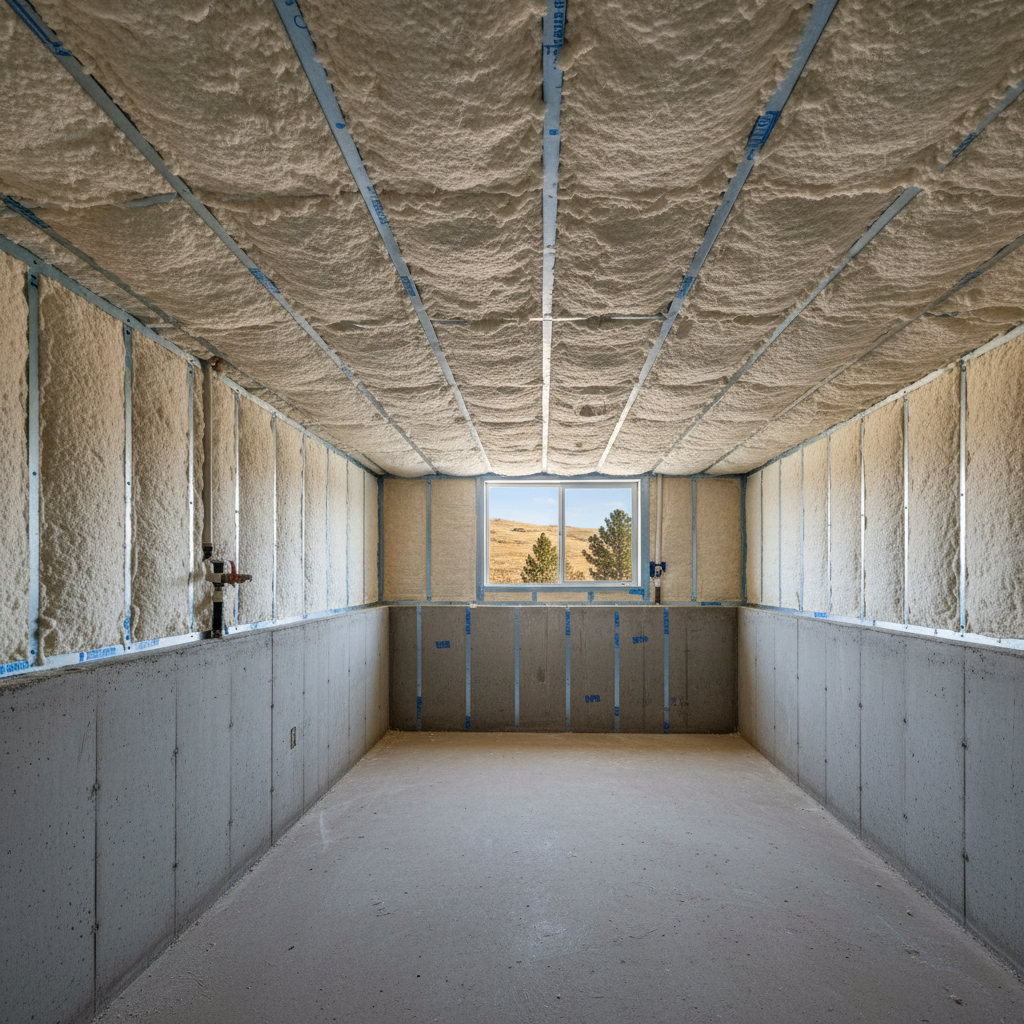
Alright, let's talk basements for a minute. You're thinking about insulating down there, and honestly, that's a really smart move for any homeowner here in Eagle. It's not just about making your home more comfortable; it'll also help cut down on those energy bills, and it can even deal with moisture issues. But I've seen enough projects go wrong to tell you straight: there are some real traps out there. Here's what you need to know to make sure you don't end up regretting your basement insulation job.
Mistake #1: Ignoring Moisture Issues First
This is probably the biggest one, bar none. It's a total non-starter. You can throw all the insulation you want at a wet basement, but it's just going to create an even bigger problem down the line. Eagle, much like the rest of the Treasure Valley, has its fair share of clay-rich soils. These soils really hold onto moisture, and that moisture can easily find its way into your basement through the foundation walls. If you've got dampness, standing water, or even just a persistent musty smell, you absolutely have to address that first, before any insulation goes in. Otherwise, you're setting yourself up for mold, mildew, and insulation that simply won't perform. And trust me, wet insulation is useless insulation. It just is.
Mistake #2: Picking the Wrong Type of Insulation Material
Not all insulation is created equal, especially when you're talking about basements. I often see people trying to use fiberglass batts directly against concrete walls, and that's just a recipe for disaster. Fiberglass can absorb moisture pretty easily, and once it gets damp, its R-value drops significantly. Plus, it becomes a perfect breeding ground for mold. For basements, you really need materials that can handle the specific environment down there. Closed-cell spray foam or rigid foam boards are usually your best bet because they resist moisture and also act as a vapor barrier. Closed-cell spray foam, in particular, does double duty as both an air and vapor barrier, which is a huge advantage in a basement, something most people don't think about.
Mistake #3: Forgetting Air Sealing
You could have the best insulation in the world, but if air is leaking in and out, you're still going to lose energy and invite moisture problems. Think of it like wearing a really warm jacket that's full of holes; it just doesn't work right. Air sealing is really important in a basement, especially around rim joists, sill plates, and any penetrations for pipes or wires. These little gaps might not seem like much on their own, but they really add up to significant energy loss and can bring in humid air that then condenses on cold surfaces. We always make sure these areas are thoroughly sealed before any insulation is put in, because that's how the work gets done right.
Mistake #4: Not Understanding R-Values and Local Codes
More insulation isn't always better if it's not the right kind or if it's installed incorrectly, but you definitely need enough. Idaho has specific R-value requirements, and for basement walls, it's generally R-19 if you're using cavity insulation, or R-15 for continuous board or spray foam. Some folks just guess or go with whatever sounds good, which is a mistake. A good contractor will know the local codes and recommend the right R-value for your specific project and climate zone. Don't just assume; ask about the R-value and make sure it meets or exceeds what's needed. Why does that matter? Because it affects your long-term energy savings.
Mistake #5: Hiring the Cheapest Bid Without Due Diligence
I totally get it; everyone wants a good deal. But when it comes to insulation, the cheapest bid can often end up being the most expensive choice in the long run. I've seen homeowners in Eagle get burned by contractors who cut corners, use inferior materials, or just don't truly understand basement dynamics. A reputable contractor, like us at Aim High Insulation, will do a thorough on-site inspection. They'll assess your specific conditions, including any existing moisture, and give you a detailed plan. They'll explain material choices, R-values, and how they'll handle air sealing. Don't be afraid to ask for references, check their licensing and insurance, and get multiple written estimates. Honestly, if a quote seems too good to be true, it probably is.
Mistake #6: Not Using Pressure-Treated Lumber Against Concrete
This is a small detail, but it's really important. Concrete naturally absorbs and holds moisture. If you frame out a basement wall with untreated wood directly against that concrete, that wood is going to wick up moisture, and eventually, you'll have rot and mold. Any wood touching the foundation needs to be pressure-treated lumber. It's a simple step that prevents a big headache down the road, and it's something that can easily be overlooked.
Look, insulating your basement is a solid investment in your Eagle home. Just make sure you're doing it right. Address any moisture issues, pick the right materials, seal up those air leaks, understand the R-values, and hire a pro who really knows their stuff. Do all that, and you'll enjoy a more comfortable, energy-efficient home for years to come. It’s worth the effort.